
Best Time to Visit the Galápagos Islands: A Month-by-Month Guide (2026–2027
The Galápagos Islands are one of the few destinations on Earth where there is no truly “bad” time to visit. But there is a best time — and it depends entirely on what you want to see and do.
Whether you’re chasing whale sharks, watching baby sea lions take their first swim, or hoping to spot the famous waved albatross, timing your trip right makes the difference between a good experience and an unforgettable one.
This guide breaks down every month so you can plan with confidence.
The Two Seasons in the Galápagos
Before diving into the month-by-month breakdown, it helps to understand the two main seasons:
Warm Season (December – May)
Water temperatures: 70–80°F (21–27°C)
Air temperatures: warm and humid, up to 90°F (32°C)
Occasional short rain showers
Calmer seas — ideal for snorkeling and swimming
Lush, green landscapes
Peak breeding season for many species
Cool/Dry Season (June – November)
Water temperatures: 65–72°F (18–22°C)
Air temperatures: cooler, 59–77°F (15–25°C)
Garúa mist (light drizzle) in the mornings
Rougher seas — best for diving and seeing large marine life
Nutrient-rich waters attract whale sharks, hammerheads, and manta rays
Bottom line: Both seasons offer extraordinary wildlife. The warm season is better for families and snorkelers; the cool season is better for divers and birdwatchers.
Month-by-Month Guide
February 🌿
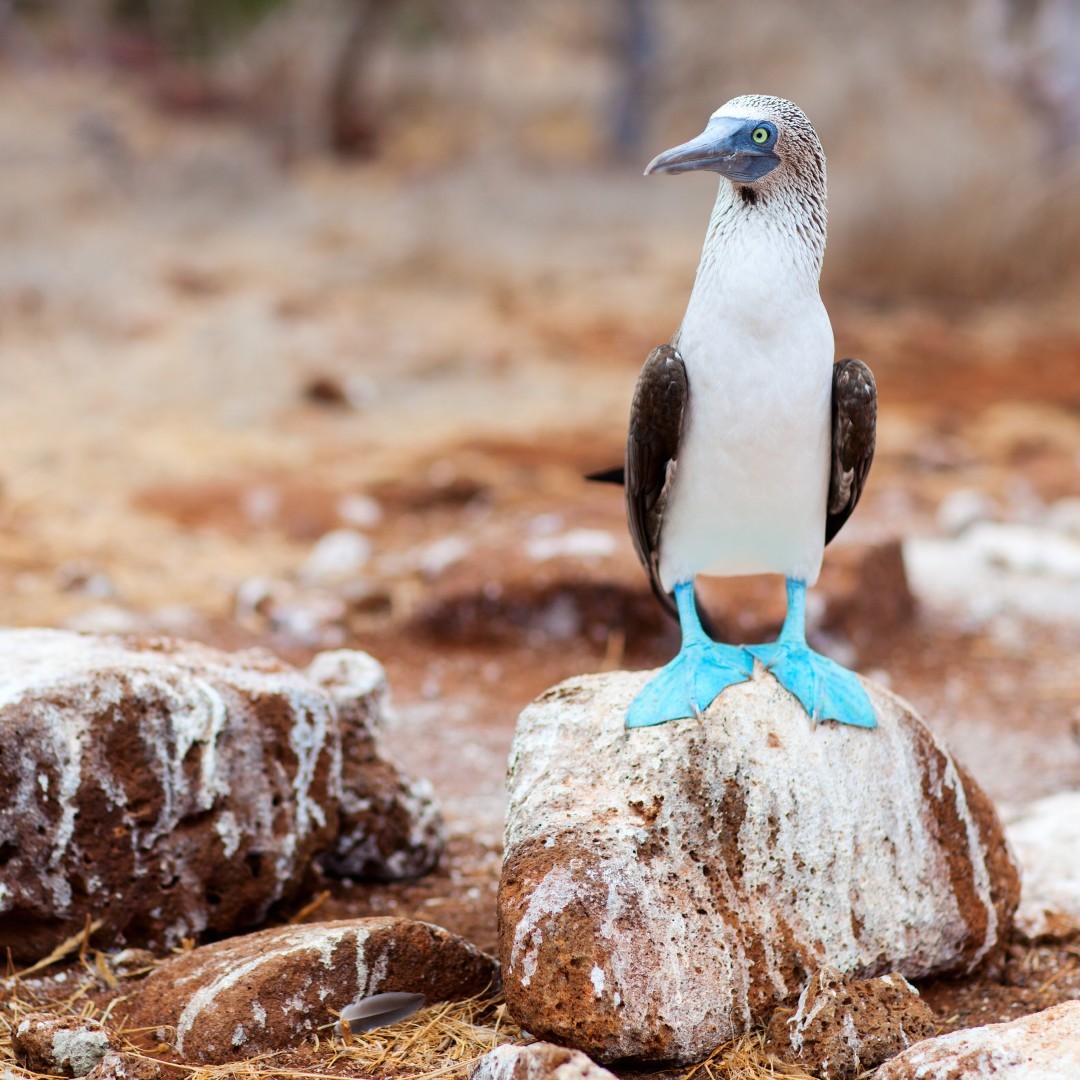
February brings warm water and the start of peak breeding activity for many land birds. Blue-footed boobies begin their courtship dances, and the highlands of Santa Cruz are lush and vivid green after rains. One of the best months overall.
Best for: Blue-footed booby courtship, birdwatching in the highlands, snorkeling.
March 🌿
March is warm, occasionally rainy, and spectacularly alive. Marine iguanas are displaying their brightest red-and-green breeding colors. Flamingos are active in lagoons. This is an excellent month with still-manageable tourist numbers.
Best for: Marine iguanas in breeding colors, flamingos, calm seas.
April 🌿
The transition month. Seas begin to cool slightly, and the Galápagos hawk starts its mating season. Whale sharks begin to appear near Darwin and Wolf Islands. Crowds are lower than the December–January peak. Great value month for tours.
Best for: Whale shark sightings beginning, Galápagos hawk courtship, fewer tourists.
May ☁️
Seas start to become choppier. The garúa mist begins rolling in during mornings. Whale sharks are present in good numbers. Wildlife is active across all islands. May is considered shoulder season — a good balance of activity, price, and wildlife diversity.
Best for: Whale sharks, lower prices, good all-around wildlife viewing.
June 🐋
The cool season begins in earnest. Waters become richer in nutrients as the Humboldt Current strengthens. Whale sharks at Darwin and Wolf Islands peak in June–July. Waved albatrosses arrive at Española Island — one of the most dramatic wildlife events in the Galápagos.
Best for: Whale shark diving, waved albatross at Española, diving visibility.
July 🐋
Peak season for diving and marine wildlife. Hammerhead sharks gather in impressive schools at Gordon Rocks and Kicker Rock. Galápagos penguins are very active on Isabela and Fernandina. Seas can be rough for non-divers, but the marine life makes it worth it.
Best for: Hammerhead sharks, penguins, advanced diving, whale watching.
September 🌥️
Seas are still active but gradually settling. Giant tortoises are migrating from the highlands back toward the coast in preparation for nesting. A quieter month than August, with most of the same wildlife benefits.
Best for: Giant tortoise migration, slightly lower crowds, good diving still.
October 🌤️
The transition back to warm season begins. Seas calm down considerably. This is one of the best-kept secrets in Galápagos travel — wildlife is still highly active, but tourist numbers drop significantly. Excellent month for both snorkeling and land exploration.
Best for: All-around wildlife, calmer seas returning, lower crowds and prices.
November 🌊
One of the most underrated months to visit. Seas are calmer, water temperatures start rising, and the first sea turtle eggs from the previous season begin to hatch. Green sea turtles are abundant in the water. Marine iguanas begin losing their breeding colors but remain very active.
Best for: Sea turtle hatching, calm seas, snorkeling, value pricing.
December 🌿
The warm season returns. Sea lions are mating and giving birth on the beaches of Santa Cruz and San Cristóbal. The landscape begins turning green again. The first two weeks of December are ideal — crowds increase significantly toward Christmas and New Year.
Best for: Sea lion pups, green landscapes, snorkeling, first two weeks before holiday rush.
What About Crowds and Prices?
Period | Crowd Level | Price Level
December 20 – January 10 | Very High | Peak
July – August | High | High
March – April | Moderate | Mid
May – June | Low–Moderate | Lower
October – November | Low | Best Value
Pro tip: October and November offer some of the best value in the Galápagos — wildlife is excellent, seas are calming, and you’ll have sites almost to yourself compared to peak season.
Which Islands to Visit by Season
Warm Season (December – May):
Santa Cruz — Giant tortoise highlands, Darwin Research Station
San Cristóbal — Sea lion beach colonies, snorkeling at Kicker Rock
Isabela — Flamingo lagoons, Wall of Tears, snorkeling with penguins.
Cool Season (June – November):
Española — Waved albatross (June–December only)
Darwin & Wolf Islands — Whale sharks and hammerhead sharks (liveaboard diving)
Fernandina — Flightless cormorants, marine iguanas, penguins
Genovesa — Red-footed boobies, frigatebirds, storm petrels
Frequently Asked Questions
What is the absolute best month to visit the Galápagos?
If we had to choose one month, we’d say October — calm seas returning, excellent wildlife, lower prices, and smaller crowds. A close second is January for families wanting warm water and baby sea lion encounters.
Is it worth visiting during the rainy season?
Yes. The “rainy season” in Galápagos only means occasional short showers, not days of heavy rain. The seas are calmer, wildlife is at its most active for breeding, and the islands are beautifully green.
When is it cheapest to visit the Galápagos?
May, June, October, and November typically offer the lowest prices for tours and cruises. Avoid December 20 – January 10 and late July–August if budget is a concern.
Can I see whale sharks in the Galápagos?
Yes — whale sharks gather at Darwin and Wolf Islands, primarily from June through November, peaking in July and August. This requires a liveaboard diving trip.
How many days should I spend in the Galápagos?
Most experts recommend a minimum of 5 days, with 7–10 days being ideal to visit multiple islands and see diverse wildlife without feeling rushed.
Ready to Plan Your Trip?
The Galápagos Islands reward those who plan ahead. Whether you’re drawn to the warm blue waters of January, the dramatic whale shark encounters of July, or the hidden gem that is October, there’s a perfect time waiting for you.
Browse our Galápagos tours → check free information
Contact us to plan your custom itinerary → Free Tourshttp://+593986186253