The History of Surfing in San Cristóbal, Galápagos
The History of Surfing in San Cristóbal, GalápagosLong before surf tourism existed here, a handful of locals were already paddling out at Wreck Bay, chasing waves in one of the most isolated places on the planet. Here’s how San Cristóbal quietly became a surf destination.
An Unlikely Setting for Surf Culture
San Cristóbal isn’t an obvious surf town. Its economy has long centered on fishing and, more recently, wildlife tourism, not board sports. Yet the island’s volcanic reef breaks and consistent swell windows drew in a small community of local surfers decades ago, largely self-taught and equipped with whatever boards made it onto the supply boats from the mainland.
Growing Alongside Conservation
Because San Cristóbal sits inside the Galápagos Marine Reserve, surf culture here developed under stricter environmental rules than almost anywhere else surfing exists. Access to certain breaks, like Manglecito and Punta Pitt, requires special permits and national park accompaniment, something virtually no other surf destination on Earth requires. That regulation shaped local surf culture into one built around respect for the reserve, not just around chasing waves.
From Local Secret to Guided Tourism
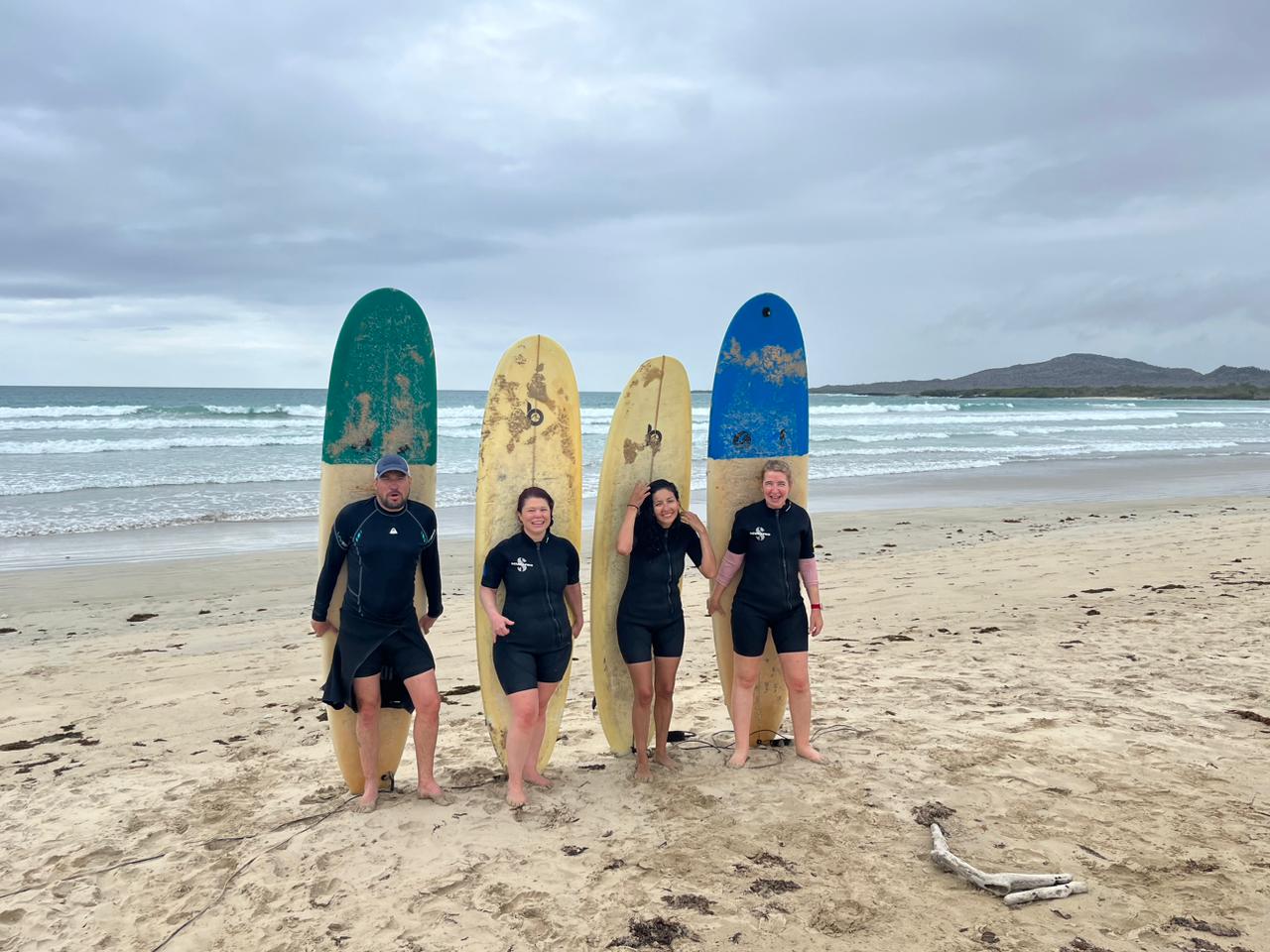
For years, surfing here stayed largely word-of-mouth among residents and the rare visiting surfer who’d heard rumors of empty reef breaks with sea lions in the lineup. Over the past two decades, that’s shifted, as local guides began offering formal lessons and guided sessions, opening up breaks that once required genuine local connections to access.
What Makes the Community Different Today
Unlike crowded surf towns elsewhere, San Cristóbal’s surf scene remains small by design. Limited accommodation, national park access restrictions, and the island’s remote location all cap how much the sport can grow here, which locals largely see as a feature rather than a limitation.
Why It Matters for Visitors Today
Understanding this history changes how a trip here feels. Surfing San Cristóbal isn’t just riding waves in a scenic location. It’s participating in a small, conservation-minded community that has protected access to these breaks specifically because it never let mass tourism define it.
Want to experience it for yourself? Book a guided surf session with a local San Cristobal guide and learn the breaks the way locals actually surf them.