
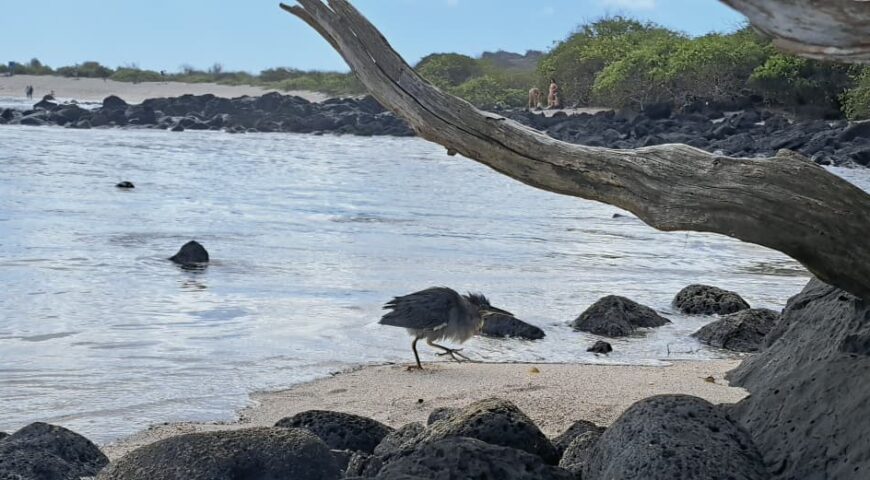
The Lava Heron: Galápagos’ Understated Gray Jewel
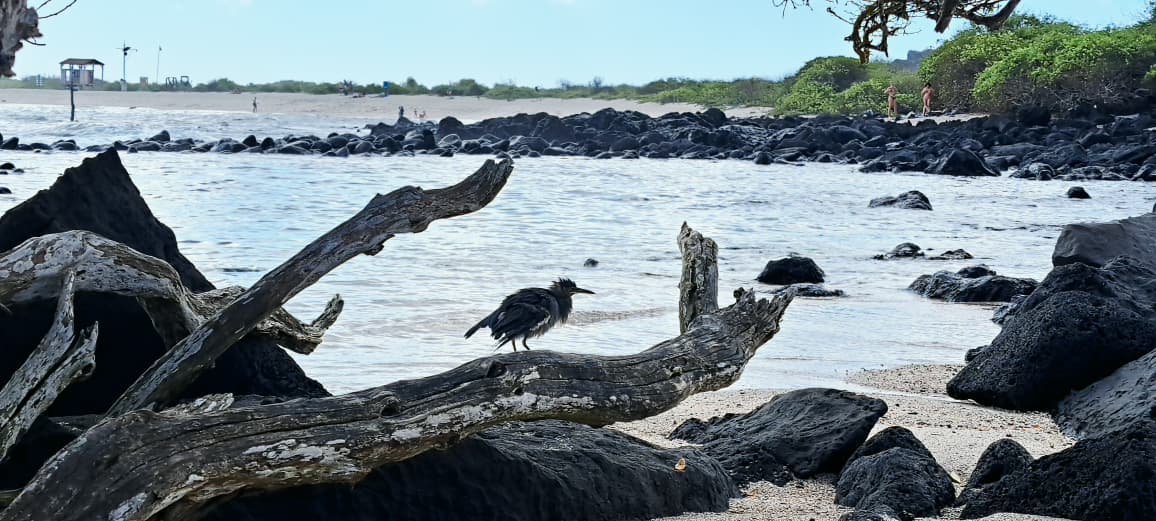 The Lava Heron is one of the most elusive birds you’ll encounter in the Galápagos Islands. If you’ve walked along the rocky shores or mangroves of the Galápagos Islands, chances are you’ve crossed paths with a small, slate-gray bird moving stealthily among the volcanic rocks, almost unnoticed. This is the lava heron, one of the archipelago’s most discreet — and most fascinating — residents.
Identity Card 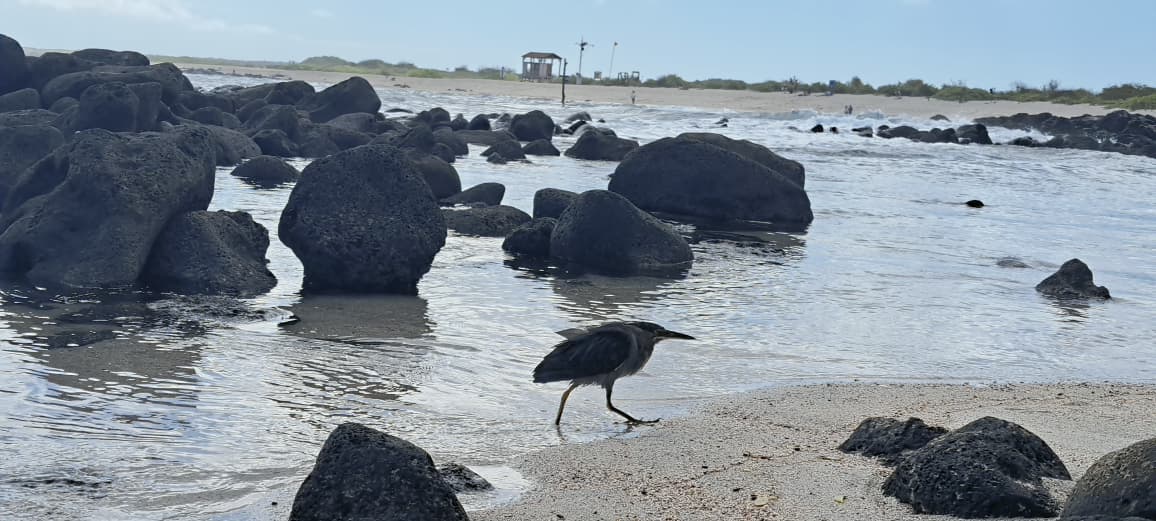
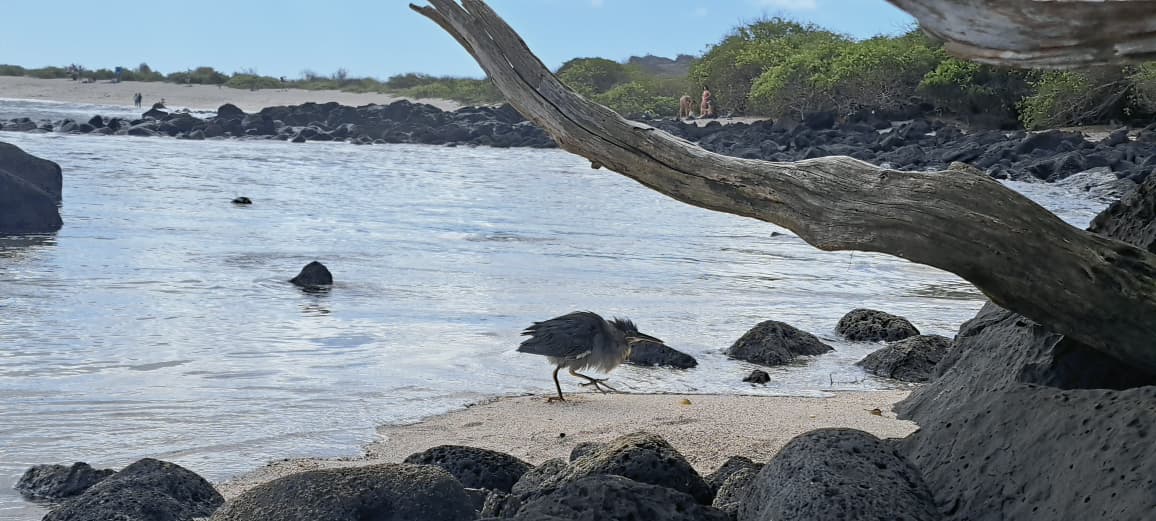
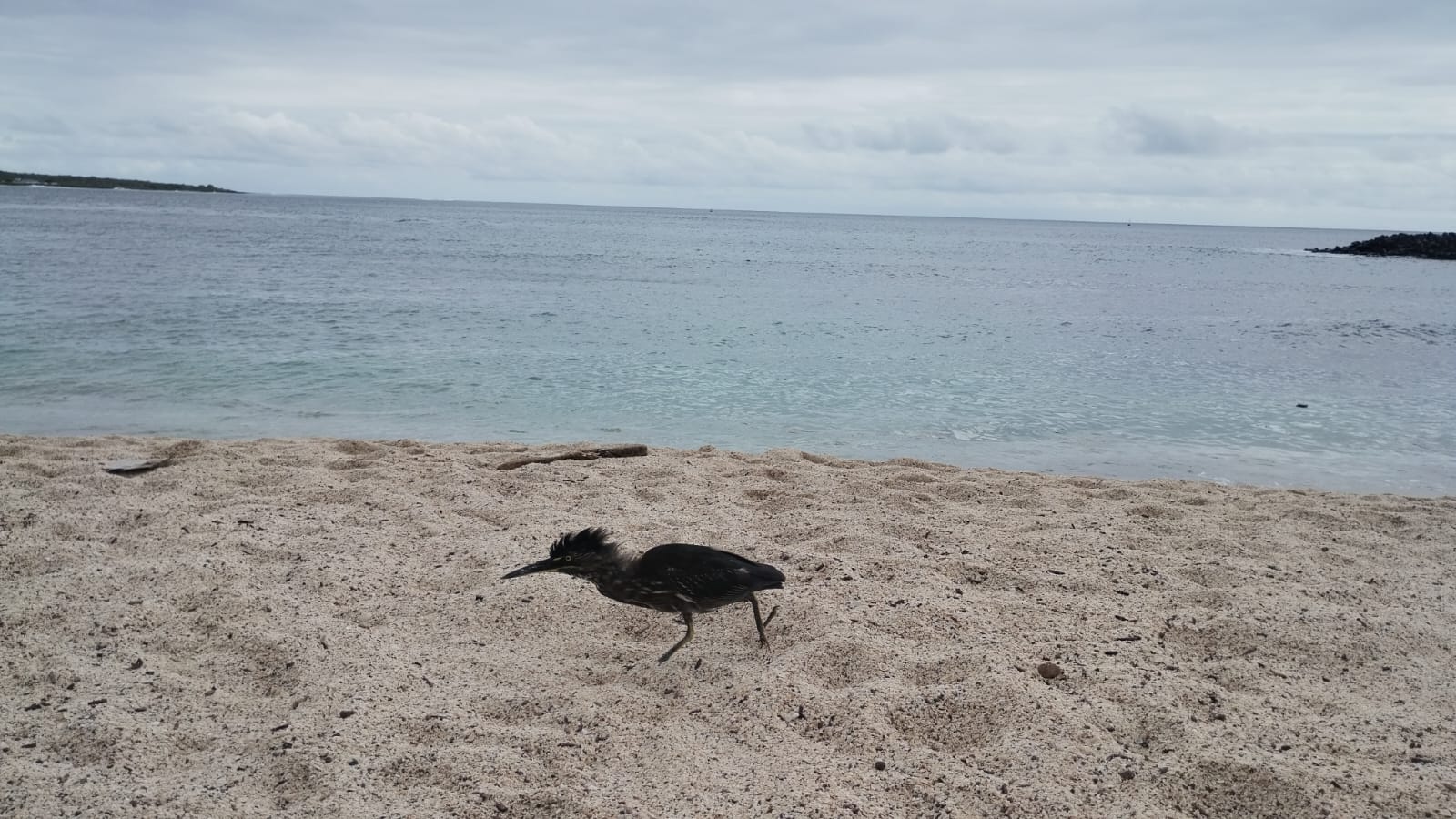
- Common name: Lava Heron, Galápagos Heron
- Spanish name: Garza de lava, garza enana de las Galápagos
- Scientific name: Butorides sundevalli
- Order: Pelecaniformes
- Family: Ardeidae (herons and egrets)
- Conservation status: Least Concern (LC)
- Size: roughly 35–41 cm (14–19 in) in length, with a wingspan of about 60–63 cm
- Weight: approximately 200–250 grams
What is a lava heron ,An Endemic Bird, Found Nowhere Else on Earth
The lava heron is endemic to the Galápagos Islands, meaning it exists nowhere else in the world. It’s closely related to the widespread striated heron (Butorides striata), found across tropical wetlands on four continents, and to the green heron (Butorides virescens), common in North and Central America.
A Fresh Scientific Discovery: Finally Its Own Species
For over a century, the lava heron’s exact place in the bird family tree puzzled ornithologists. Was it a true species, or simply a color variant of the mainland striated heron? Researchers had debated this question since at least the 1930s.
That mystery was formally resolved in a 2026 study, led by Ezra Mendales as part of his master’s thesis at San Francisco State University (SFSU), working with SFSU Associate Professor Jaime Chaves and California Academy of Sciences Ornithology Curator Jack Dumbacher. The findings were published in the journal Molecular Phylogenetics and Evolution.
Key takeaways from the research:
- The team analyzed thousands of genetic markers together with measurements from over 300 museum specimens, building the most complete evolutionary picture of the genus Butorides assembled to date.
- The results confirmed that the Galápagos lava heron forms its own distinct evolutionary lineage, settling the long debate in favor of full species status: Butorides sundevalli.
- Perhaps the biggest surprise: the lava heron’s closest living relatives turned out to be a completely different species altogether — the North American green heron — rather than the South American striated heron it had long been grouped with.
- The lava heron was also found to have a noticeably thicker bill than its closest relatives, an adaptation likely linked to feeding among sharp volcanic rock and hard-shelled prey.
- The study also helped explain a long-standing puzzle: occasional Galápagos individuals with lighter, striated-heron-like plumage. Researchers had been unsure whether these were recent arrivals from the mainland, a separate resident population, or simply a color variant of the endemic species.
- The lava heron was formally described as one of 72 new species named by the California Academy of Sciences in 2025-2026, alongside a deep-sea fish and a rare desert sunflower relative, among others.
Researchers involved noted how rare this kind of moment is for a modern ornithologist — most biologists never get the chance to be part of naming a new bird species, let alone one from a place as scientifically storied as the Galápagos, where Darwin’s own observations shaped the theory of evolution.
Lava Heron Appearance: Nature’s Camouflage Expert
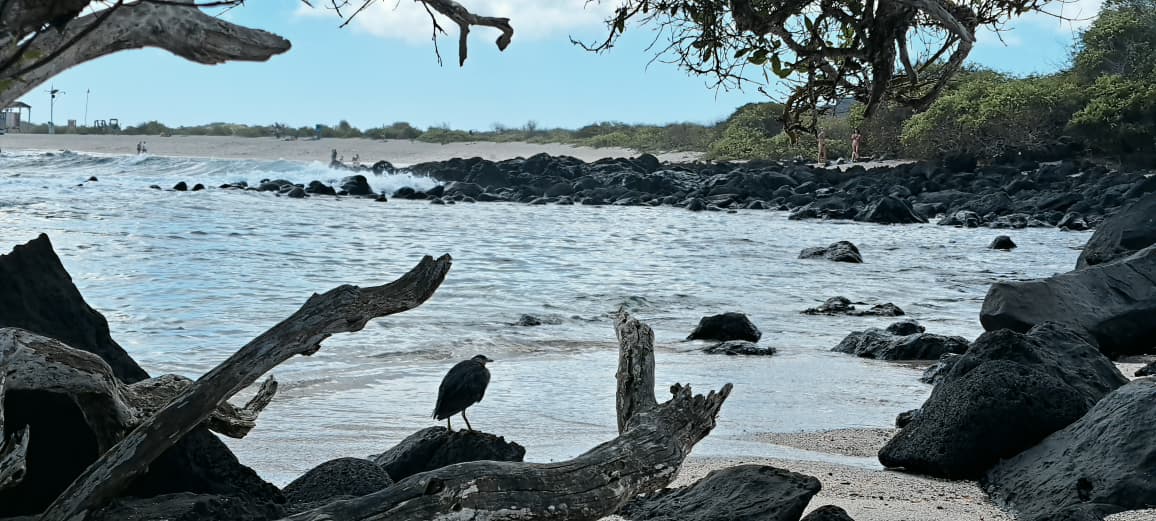
Its dark gray, almost black plumage is no accident — it’s an evolutionary adaptation for blending in with the volcanic rock where the bird spends much of its time hunting. The back feathers often carry a slight silvery sheen, and the bird sports a short crest on its head. During breeding season, adults’ legs shift from dull gray to bright orange, and the male’s bill darkens toward black.
Where to Spot the Lava Heron in Galápagos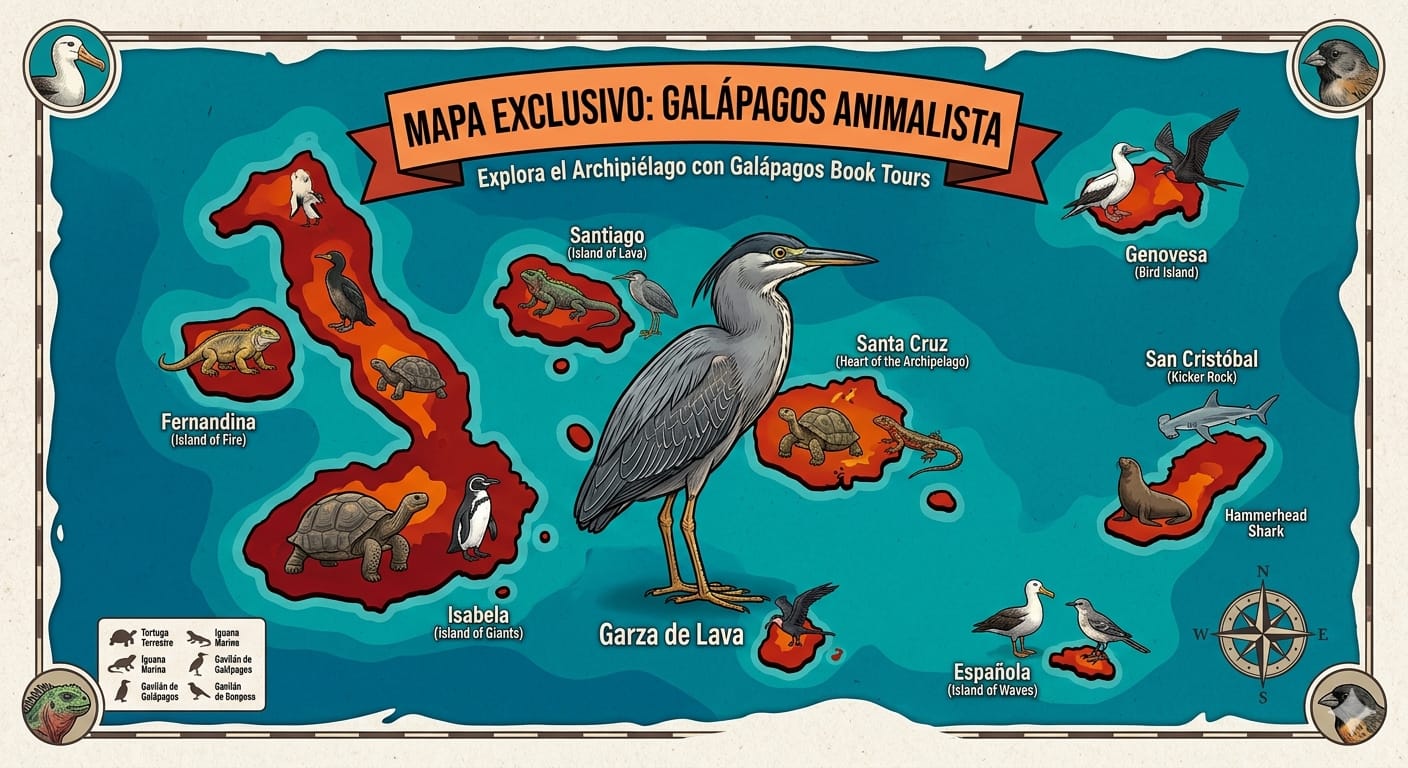
The lava heron favors:
- Rocky lava coastlines
- Mangrove forests
- Brackish lagoons and salt marshes
- Docks and intertidal zones
It can be spotted across nearly every island in the archipelago, and is especially common around James Bay, Puerto Baquerizo (San Cristóbal), Villamil Beach (Isabela), and the fishermen’s dock in Santa Cruz.
Behavior and Diet
The lava heron is a solitary, territorial hunter. Its technique is patient ambush: it stays motionless on a rock until prey wanders close, then strikes with a quick jab of its bill.
Its diet mainly includes:
- Small fish
- Crabs, including Sally Lightfoot crabs (genus Grapsus)
- Small lizards
- Shrimp
- Flies that gather near cactus plants
The species is also known for low, skimming flights, gliding just above the water or rocks while hugging the coastline as it moves between feeding grounds or returns to its roosts and nests, particularly at dawn.
With virtually no natural predators on the islands, the lava heron is remarkably tame and unbothered by humans — it’s not unusual to be able to photograph one from just a few feet away.
Reproduction
Lava herons are monogamous within a breeding season, though they may seek a new mate the following year.
They nest in mangroves.
Incubation lasts 21 to 23 days.
Clutches typically consist of 2 to 3 eggs.
Why It Matters
Beyond its quiet beauty, the lava heron is a textbook example of how isolation can shape entirely new species — and how much is still being discovered even in one of the most heavily studied ecosystems on Earth. The 2026 genetic study is a reminder that even a “common,” easily overlooked bird can rewrite the evolutionary map once scientists look closely enough.
Next time you’re walking a mangrove trail or a lava-rock beach in the islands, look closely between the dark stones — the lava heron might already be watching you.