
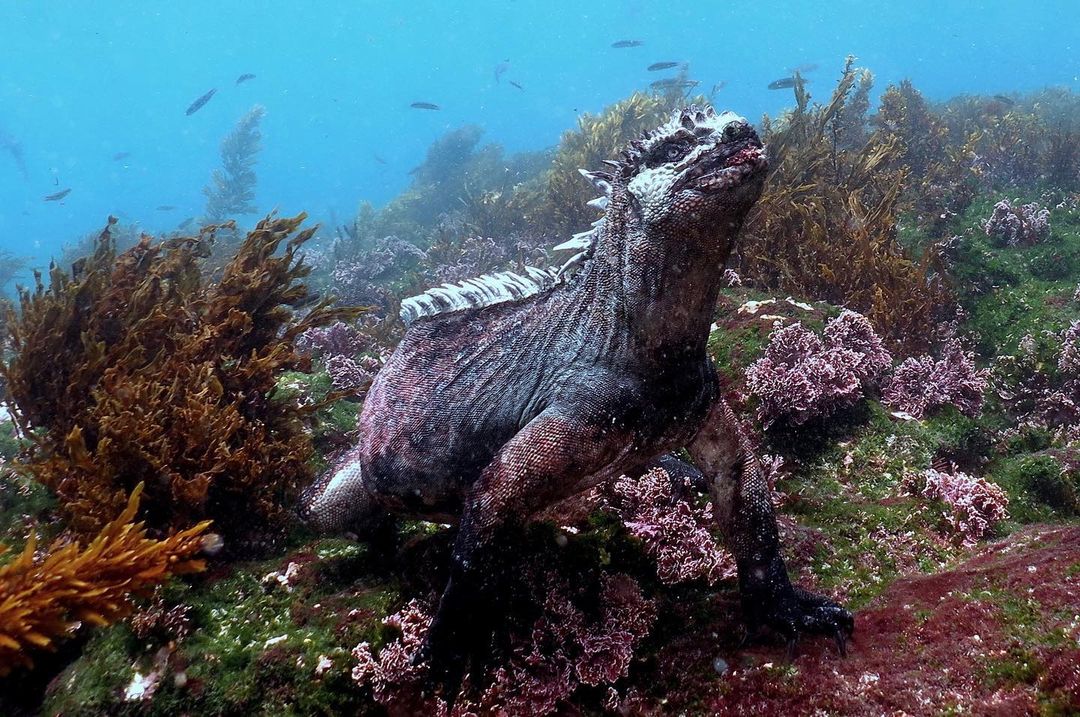
The Marine Iguana: Earth’s Only Sea-Going Lizard
Of all the strange and wonderful creatures Charles Darwin encountered in the Galápagos, few puzzled him as much as the Galapagos marine iguana. He famously called it “a hideous-looking creature, of a dirty black colour, stupid, and sluggish in its movements.” Nearly two centuries later, science has proven this “hideous” reptile to be one of the most remarkable examples of evolutionary adaptation on the planet — and researchers are still uncovering new secrets about it today.
Fact File
- Common name: Marine iguana, sea iguana
- Scientific name: Amblyrhynchus cristatus
- Family: Iguanidae
- Conservation status: Vulnerable (IUCN); listed on CITES Appendix I since 2025, the highest level of international protection against commercial trade
- Length: up to 1.3 m (4.3 ft) in the largest populations
- Distribution: endemic to the Galápagos archipelago, found on the coasts of nearly every island, across an estimated range of just 275 km²
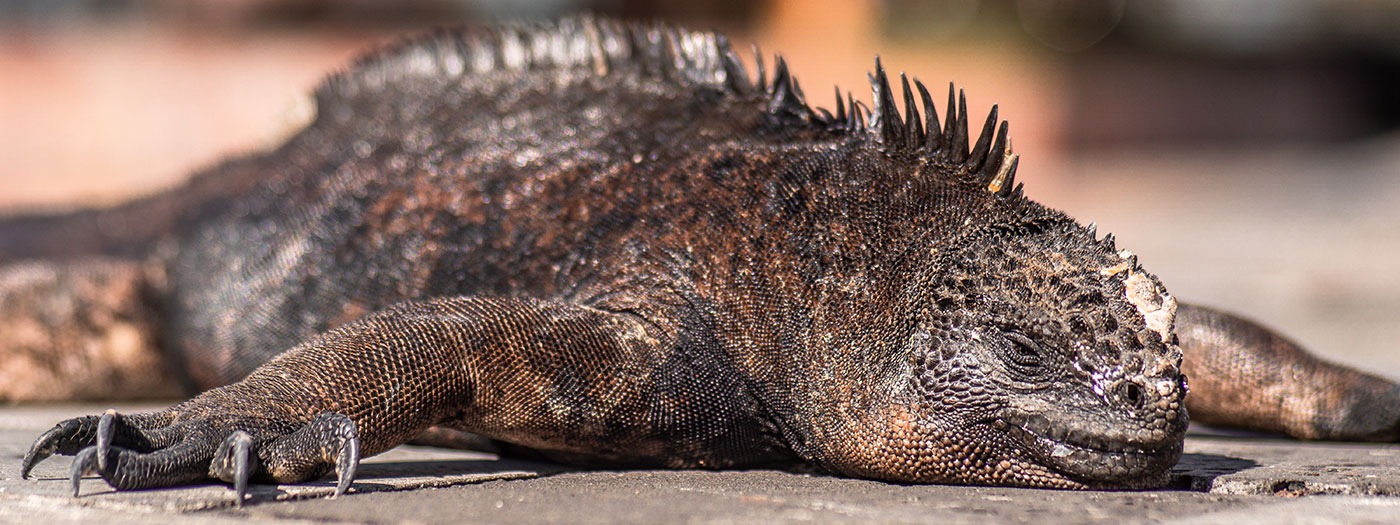 The World’s Only Marine Lizard
The marine iguana holds a genuinely unique title in the animal kingdom: it is the only lizard on Earth that forages in the sea. Adults dive along rocky shorelines to graze on marine algae, and some individuals have been recorded diving as deep as 30 meters in the turbulent waters around the islands — a remarkable feat for a reptile with no obvious aquatic adaptations like fins or gills.
Marine iguanas share a common ancestor with mainland iguanas from South America, having diverged at least 10 million years ago — long before most of today’s visible islands had even formed. Since the Galápagos have never been connected to a continent, ancestral iguanas are believed to have rafted across the ocean on vegetation, eventually evolving into the sea-adapted species we know today.
New Science: The Galapagos Marine Iguana Is not One Species, But Eleven Lineages
For decades, all marine iguanas were treated as a single, if highly variable, species. That picture changed with a major genetic and morphological study led by Dr. Sebastian Steinfartz of the Technical University of Braunschweig, working with an international team of European and Latin American researchers. Their analysis identified 11 distinguishable subspecies across the archipelago — five of them newly described, including a striking population from northern San Cristóbal Island informally nicknamed the “Godzilla” marine iguana (Amblyrhynchus cristatus godzilla) for its especially rugged, dragon-like appearance.
This kind of fine-scale diversity is part of why marine iguana populations differ so much from island to island. The smallest individuals are found on Genovesa, some of the largest live on Fernandina and Isabela, and the most vividly colored population — with patches of coppery green and red — belongs to Española Island. That red pigment comes directly from a species of algae that blooms during the iguanas’ mating season.
Adapting to a Hostile Ocean
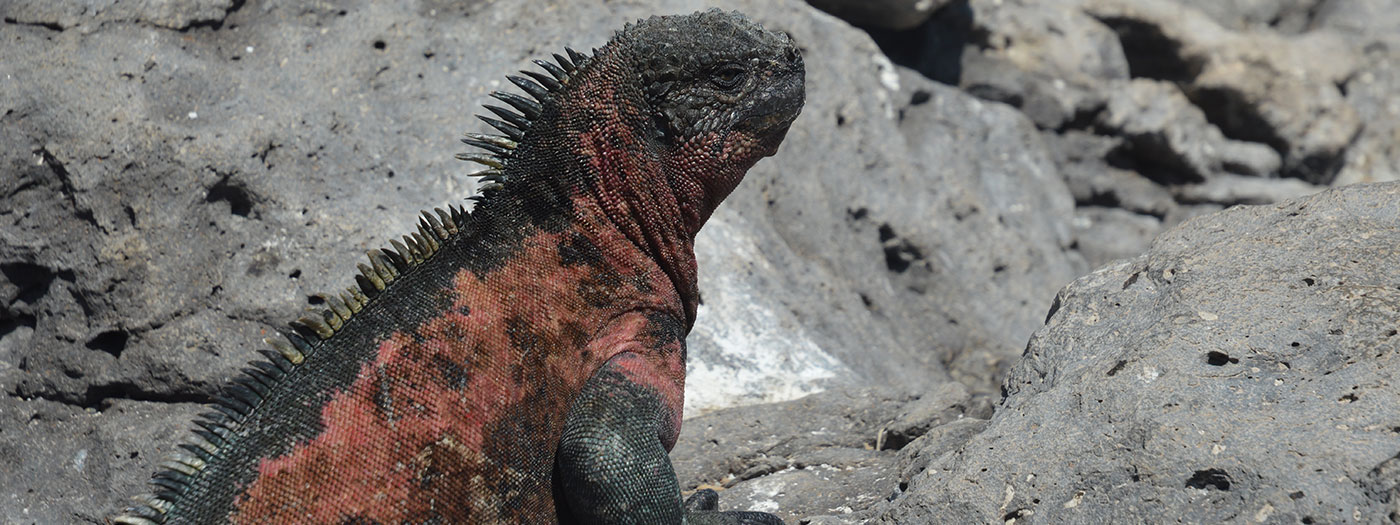
Marine iguanas face a problem no land iguana does: the surrounding seawater is far colder than their body needs to digest food efficiently. To cope, they:
Bask on dark volcanic rocks after diving, since their black coloration helps them reabsorb heat quickly
Slow their heart rate underwater to conserve oxygen and manage heat loss during dives
Sneeze out excess salt absorbed from seawater through specialized nasal glands, often leaving a visible white crust on their heads
Surviving El Niño: A 2025 Discovery
Marine iguanas face a recurring existential threat: El Niño events, which warm coastal waters every 2 to 7 years and devastate the algae the iguanas depend on for food. During the most severe El Niño years, mortality across the archipelago can reach as high as 60%.
Scientists already knew that marine iguanas can physically shrink during these events — reabsorbing their own bone and cartilage to reduce body size and lower their energy needs, then regrowing once food returns. But a 2025 study published in the Journal of Zoology, led by researcher Shahar Dubiner of Tel Aviv University together with collaborators from Israel, Ecuador, Australia, and the United States, went a step further. By monitoring heart rates as a proxy for metabolic rate, the team found that marine iguanas also actively lower their metabolism during El Niño conditions — an energy-saving strategy layered on top of their ability to shrink, helping them endure prolonged famine when their food source collapses.
Hybrids on Plaza Sur 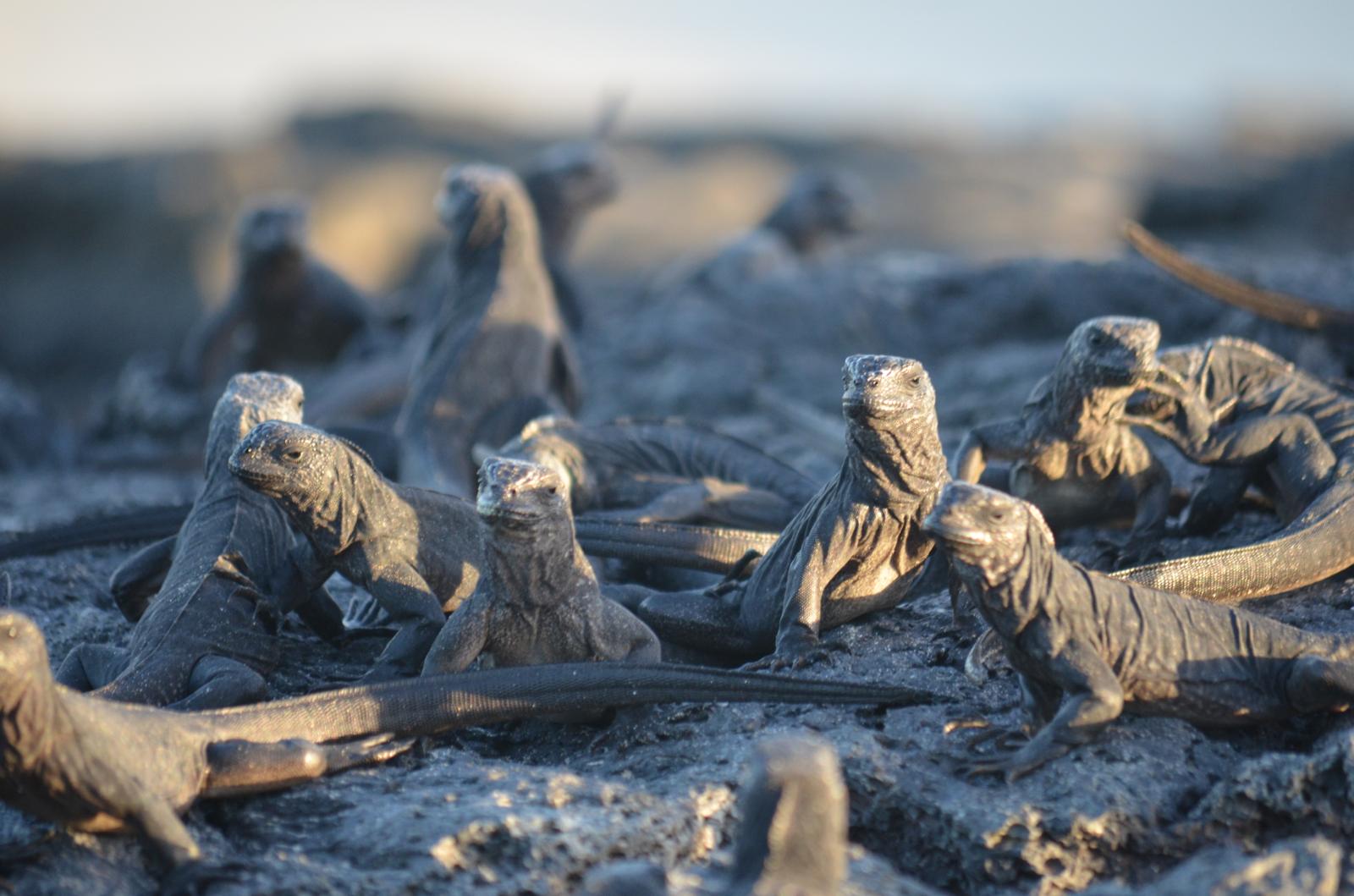
In one of the more unusual chapters of marine iguana biology, occasional hybrids between marine iguanas and their land-dwelling cousins have been documented on the tiny island of Plaza Sur, where both species overlap. DNA evidence confirms that this cross-species hybridization does occur, though it remains rare.
New Health Research 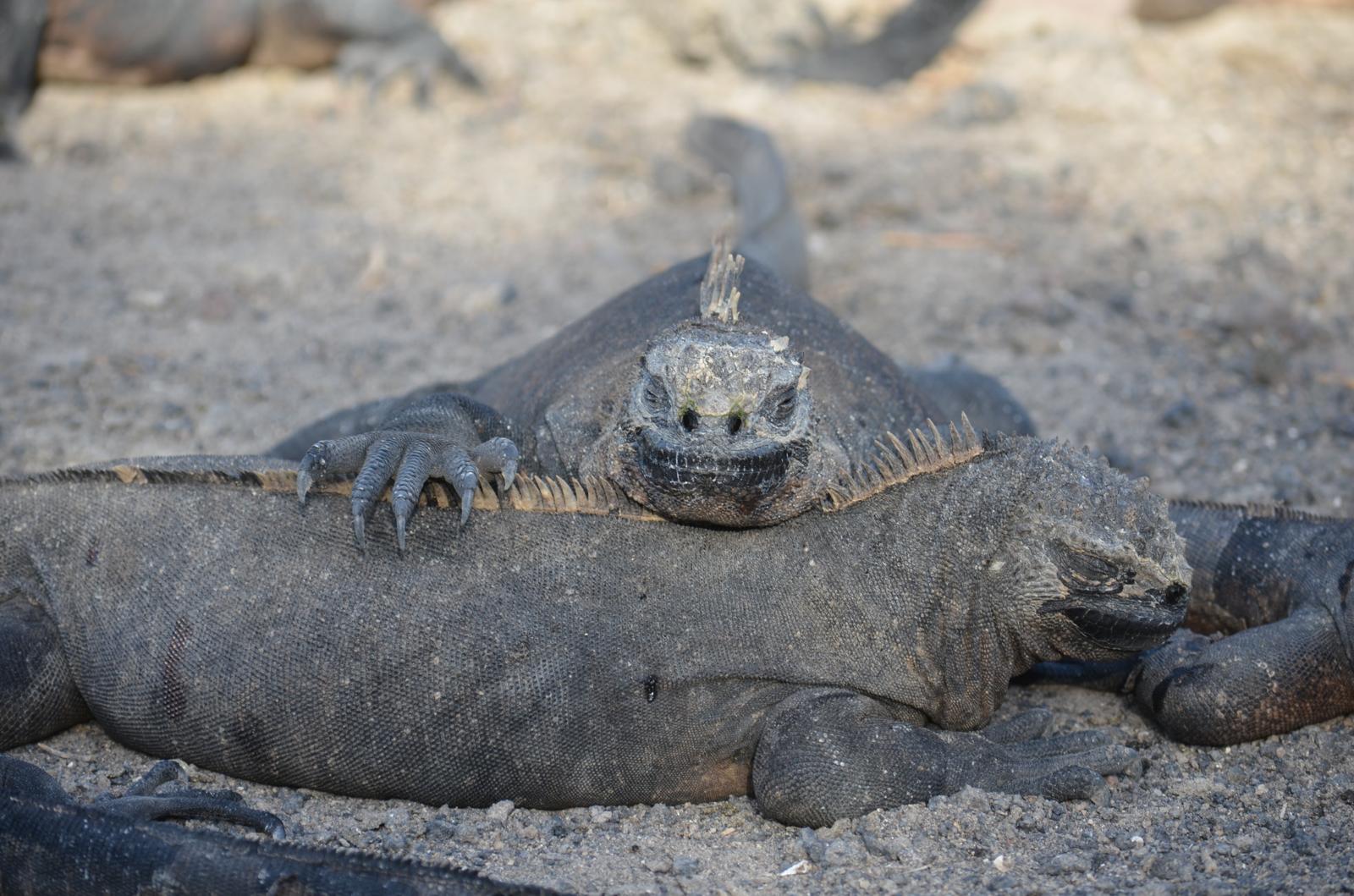
Marine iguana health continues to be an active area of study. A 2025 transcriptomic analysis detected a previously uncharacterized bacterium, Candidatus Allocryptoplasma, in blood samples from marine iguanas across nine islands, adding to a growing body of research into the parasites and pathogens — including tick-borne hemoparasites — that affect the species. Understanding these disease dynamics is considered increasingly important as climate change and other human-driven pressures continue to threaten the archipelago’s ecosystems.
Conservation Status
Marine iguanas are currently classified as Vulnerable by the IUCN, with a declining population trend. In a major step for their protection, all Galápagos iguana species were uplifted to CITES Appendix I status in 2025 — the strongest form of international protection available, banning all commercial international trade in the species. Conservation groups have also begun using drone technology combined with citizen science, through projects such as “Iguanas from Above,” to build the first comprehensive population survey of marine iguanas ever undertaken.
Why the Marine Iguana Matters
Darwin dismissed the marine iguana as ugly and dull, but modern science tells a very different story: a reptile that dives like a seal, shrinks its own skeleton to survive famine, slows its heartbeat to conserve heat, and has quietly diversified into at least 11 distinct lineages across a handful of volcanic islands. Few animals on Earth illustrate the raw creativity of evolution as vividly as the marine iguana — proof that in the Galápagos, even the “hideous” creatures turn out to be extraordinary.